
Aposemat Project
Malware on IoT
A project to help to better detect IoT attacks
Aposemat is a project that was born in the Stratosphere Laboratory at the Czech Technical University in Prague and is funded by Avast Software
Goal
To protect IoT devices by analyzing, executing, and detecting attacks and malware
Motivation
Protect the community from treats in the IoT ecosystem
How
Creating and maintaining a laboratory not only to execute malware but also honeypots and exposed devices. This allow us to analyze malware and real attacks.
Sharing results continuously with the community through conferences talks, papers, blogpost, sharing twitter feeds and replying any inquiry related to IoT security.
Following different research lines to tackle the IoT Security from different angles and perspectives.
Developing open-source tools with the community
Our Team

Our Laboratory
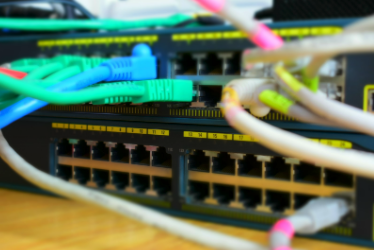
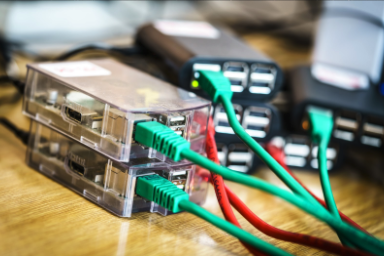
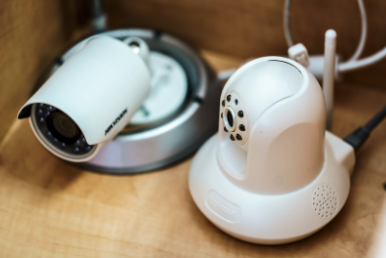
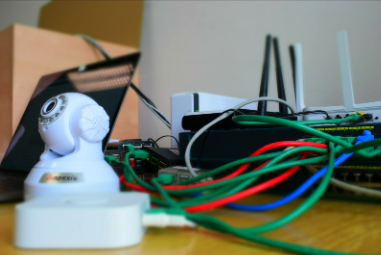
Our IoT Laboratory have real IoT devices that are infected and attacked constantly, Some of the devices are RaspberryPi's, Alexa, NAS, IP cameras, Philips hue lamps, SmartLock, Routers, etc.
In our laboratory we execute real malware and capture the network traffic to analyze it.
Aposemat Research Lines
Previous Research Lines
Tools
Publications of the Aposemat Project
We started working with UptimeRobot in our IoT lab, and it was like suddenly someone turned on the light.
Privacy-preserving DNS protocols like DNS over HTTPS (DoH), DNS over TLS (DoT), and DNS over QUIC (DoQ) have been around since 2014 but they have only recently been brought to the attention of the general public following Firefox’s announcement to make DoH a default.
This white paper explores what is the current state of IPv6 security in IoT, what is the global growth of IPv6 and how does this growth look like in a real network. If IPv6 is already being used, are attackers already attacking using this protocol? Is there already malware capable of attacking on IPv6? Read through as we aim to answer these questions.
Within the Aposemat Team, we’ve been working on testing the capabilities of IPv6 and how malware could take advantage of it. One of the topics we explored was exfiltration of data via the IPv6 protocol. In this blog post we will share our study into this topic.
CVEs, or Common Vulnerabilities and Exposures, are IDs used to reference know vulnerabilities. These provide a description and public information provided by the parties involved in the disclosure of the vulnerability or exposure and are often used by researchers to act upon the disclosed information. While working on collecting information about specific CVEs in a simple form we came up with an small piece of code that will make that work much simpler and fast.
In this blog post we were able to take a sneak peek of what is Dark Nexus capable of and its details. We explored this by presenting it via three characteristics we named the old, the new and the ugly.
For this blog post we will analyze the x86-64 version of RHOMBUS, originally shared by MMD and found by R. Bansal (@0xrb). At the time this post was written, this sample has a 4/59 detection rate (4 out of 59 AVs detected this file as malicious) according to VirusTotal.
This post is a continuation of the IoT-23 In Depth series based on the IoT-23 Dataset, the first dataset of malicious and benign IoT network traffic, that consists of 23 scenarios. In this blog post we provide an analysis of Scenario 9, CTU-IoT-Malware-Capture-60-1. This malware sample is called Hide-and-Seek. This variant is an IoT malware family capable of different types of DDoS attacks, exploits vulnerabilities in other devices, such as routers and wireless cameras, and to brute force the Telnet service across the Internet to expand its botnet. This malware makes use of the custom peer-to-peer (P2P) protocol to transfer data.
This post is a continuation of the IoT-23 In Depth series based on the IoT-23 Dataset, the first dataset of malicious and benign IoT network traffic, that consists of 23 scenarios [1]. In this blog post we provide an analysis of Scenario 9 [2], CTU-IoT-Malware-Capture-60-1. This malware sample is called Gafgyt. This variant is an IoT malware family capable of different types of DDoS attacks and exploits vulnerabilities in other devices, such as routers, to expand its botnet which has been seen attacking gaming servers [3].
The Swiss Cyber Security Days are a two-day event in Fribourg, Switzerland. This event brought together Cyber security researchers, consultants from technology, business, politics and the general public interested in cybersecurity from all over the world.
At the second edition of the Swiss Cyber Security Days our researcher Maria Jose Erquiaga presented the work of the Aposemat laboratory in the talk: “The Truth is out there: Hunting malware from an IoT laboratory”.
This post is a continuation of the IoT-23 In Depth series based on the IoT-23 Dataset, the first dataset of malicious and benign IoT network traffic, that consists of 23 scenarios [1]. In this blog post we provide an analysis of Scenario 13 [2], CTU-IoT-Malware-Capture-8-1. This malware sample is called Hakai and it’s a variant of Linux.Mirai/Gafgyt. Mirai is an IoT malware family capable of different types of DDoS attacks, telnet brute force attacks and it uses different sets of exploits to infect other devices, such as routers.
This post is a continuation of the IoT-23 In Depth series based on the IoT-23 Dataset, the first dataset of malicious and benign IoT network traffic, that consists of 23 scenarios [1]. In this blog post we show an analysis of Scenario 19 [2], CTU-IoT-Malware-Capture-3-1. This malware sample is called Muhstik and it’s a variant of the STD/Tsunami bot. The STD/Tsunami bot is an IoT malware capable of different types of DDoS attacks and it uses the IRC protocol to communicate with its C&C server.
Zeek Package IRC Feature Extractor extends the functionality of Zeek network analysis framework. We create IRC Feature Extractor Zeek Package to automatically recognize IRC communication in a packet capture (pcap) file and to extract features from it. The goal for the feature extraction is to describe an individual IRC communications that occur in the pcap file as accurately as possible.
A couple of weeks ago, we released the IoT-23 Dataset, the first dataset of malicious and benign IoT network traffic, that consists of 23 scenarios. In this blog post we provide an analysis of Scenario 18, CTU-IoT-Malware-Capture-9-1. This malware sample is Hajime. We analysed the binary sample and the network traffic of this scenario.

A university project turned into a powerful tool: Rocío Baggio and Diego Forni’s graph-based system connects malicious IPs, attack techniques, and threat actors—giving cybersecurity analysts clearer insights into the ever-evolving threat landscape.