
Publications
These are the current research publications related to the Stratosphere IPS project.
Please scroll to the right on each topic to see the complete list of publications.
Journals and Books

Large language models are increasingly used as programming assistants, but their security behavior remains uneven: they may generate code with vulnerable patterns, and they may provide actionable help for malicious requests. This paper introduces AlquistCoder, a compact 3.8B‐parameter coding assistant designed to address both risks through targeted synthetic‐data alignment.

Autonomous intelligent agents offer a transformative approach to cyber defense by operating independently in complex and dynamic environments. While much research has focused on defensive systems, offensive agents are equally important for testing system resilience and improving defenses through realistic adversarial interaction. Recent advances demonstrate that large language models can automate penetration testing effectively, rivaling traditional reinforcement learning methods, but their reliance on cloud-based services introduces significant concerns around privacy and reproducibility.
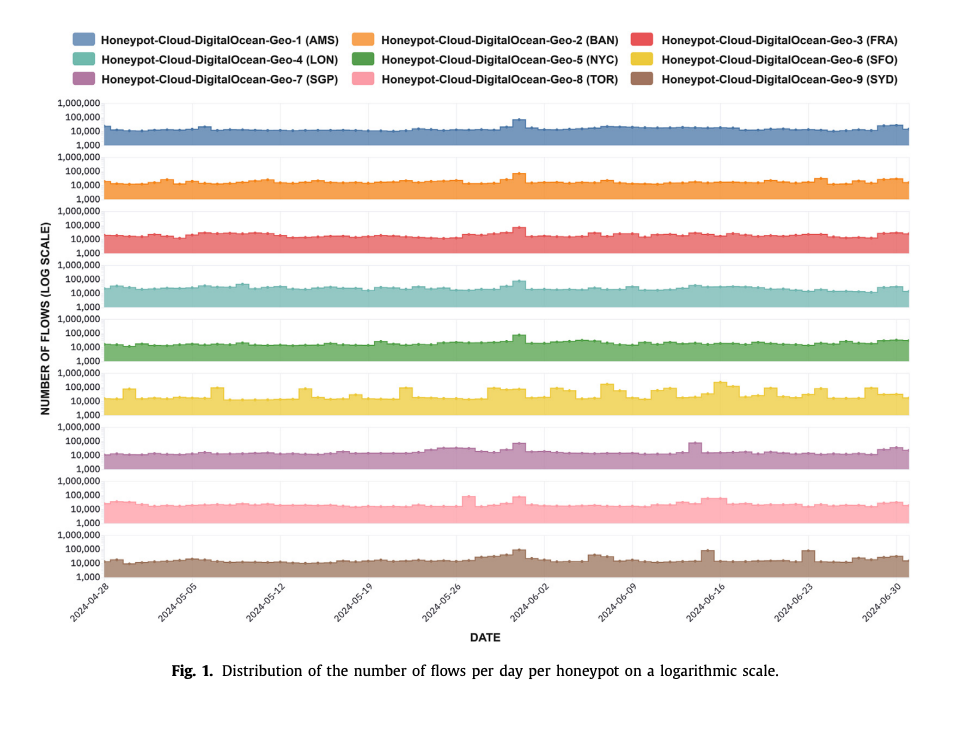
This data article introduces a new network dataset created to help understand how geographical location impacts the quality, type, and amount of incoming network attacks received by honeypots. The dataset consists of 12.4 million network flows collected from nine low-interaction honeypots in nine cities across the world for 65 days, from April 29th to July 1st, 2024. Each low-interaction honeypot was identically configured to capture incoming attacks using a state-of-the-art network flow collector, Zeek. Honeypots were distributed in nine cities: Amsterdam, Bangalore, Frankfurt, London, New York, San Francisco, Singapore, Toronto, and Sydney. The dataset is in JSON format and contains all types of Zeek network flow files, including protocol-specific logs.

This paper analyzes the main discussion topics in the Conti chat leak using machine learning techniques such as Natural Language Processing (NLP) and Latent Dirichlet Allocation (LDA), as well as visualization strategies. Five discussion topics are found: (1) Business, (2) Technical, (3) Internal tasking/Management, (4) Malware, and (5) Customer Service/Problem Solving. Moreover, the distribution of topics among Conti members shows that only 4% of individuals have specialized discussions while almost all individuals (96%) are all-rounders, meaning that their discussions revolve around the five topics.

As machine learning becomes more widely used, the need to study its implications in security and privacy becomes more urgent. Although the body of work in privacy has been steadily growing over the past few years, research on the privacy aspects of machine learning has received less focus than the security aspects. Our contribution in this research is an analysis of more than 45 papers related to privacy attacks against machine learning that have been published during the past seven years. We propose an attack taxonomy, together with a threat model that allows the categorization of different attacks based on the adversarial knowledge, and the assets under attack. An initial exploration of the causes of privacy leaks is presented, as well as a detailed analysis of the different attacks. Finally, we present an overview of the most commonly proposed defenses and a discussion of the open problems and future directions identified during our analysis.

Model stealing attacks have been successfully used in many machine learning domains, but there is little understanding of how these attacks work against models that perform malware detection. Malware detection and, in general, security domains have unique conditions. In particular, there are very strong requirements for low false positive rates (FPR). Antivirus products (AVs) that use machine learning are very complex systems to steal, malware binaries continually change, and the whole environment is adversarial by nature. This study evaluates active learning model stealing attacks against publicly available stand-alone machine learning malware classifiers and also against antivirus products.

Through an inductive thematic analysis of semi-structured interviews with experts, this study corroborates key findings on contextual and organisational dynamics behind profit-driven cybercrime. The findings pinpoint three contextual factors influencing individuals to participate in profit-driven cybercrime: lack of legal economic opportunities, lack of deterrents, and drifting means. The findings also highlight how experts perceive group structures of those behind profit-driven cybercrime: as organised, enterprise-like, loose networks, or communities. Experts’ narratives, moreover, emphasise the presence of a workforce at the periphery of cybercrime groups. Such a workforce is not actively involved in developing criminal schemes, yet it helps their orchestration by achieving necessary tasks such as writing texts or developing software. The study results confirm key insights on crime participation related to both cyber and non-cybercrime literature while also raising new research avenues, including questions concerning to what extent those forming the peripheral workforce are willing to participate in cybercrime.

The cybercrime industry is characterised by work specialisation to the point that it has become a volume industry with various “as-a-service” offerings. One well-established “as-a-service” business model is blackmarket pay-per-install (PPI) services, which outsource the spread of malicious programmes to affiliates. Such a business model represents the archetype of specialisation in the cybercrime industry: a mass of individuals, known as affiliates, specialise in spreading malware on behalf of a service. Extant literature has focused on understanding the scope of such a service and its functioning. However, despite the large number and aggregate effect of affiliates on cybercrime, little research has been done on understanding why and how affiliates participate in such models. This study depicts the motivations and challenges of affiliates spreading Android banking Trojan applications through a blackmarket PPI service. We conducted a thematic analysis of over 6,000 of their private chat messages. The findings highlight affiliates’ labour-intensive work and precarious working conditions along with their limited income, especially compared to their expectations. Affiliates’ participation in cybercrime was found to be entangled between legal and blackmarket programmes, as affiliates did not care about programmes’ legal status as long as they yielded money. This study contributes to the literature by providing additional evidence on the downsides of work specialisation emerging from the cybercrime industry.
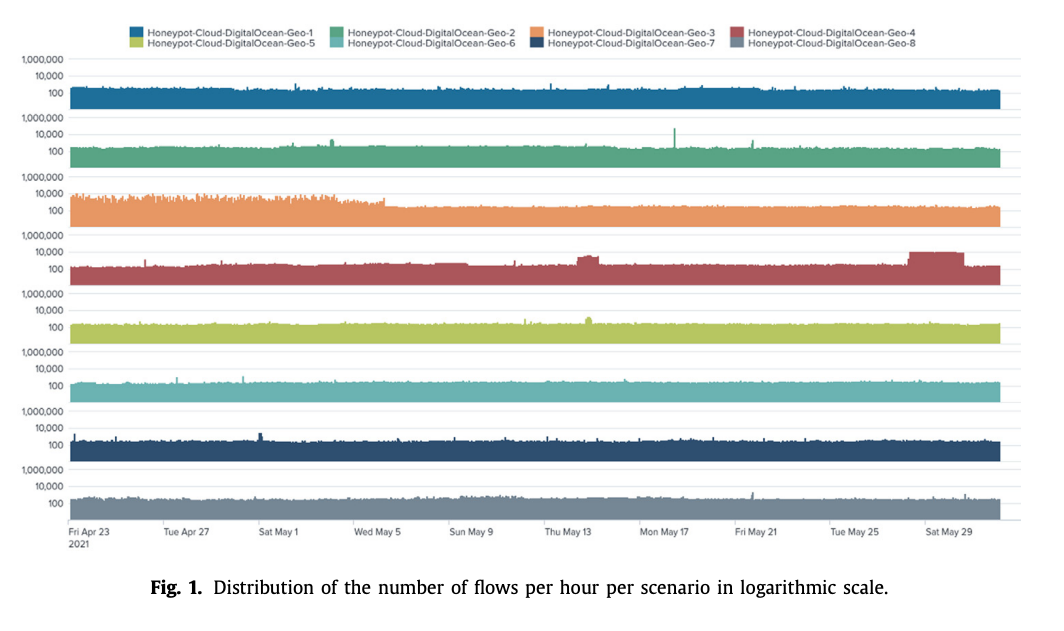
Deception technologies, and honeypots in particular, have been used for decades to understand how cyber attacks and attackers work. A myriad of factors impact the effectiveness of a honeypot. However, very few is known about the impact of the geographical location of honeypots on the amount and type of attacks. Hornet 40 is the first dataset designed to help understand how the geolocation of honeypots may impact the inflow of network attacks. The data consists of network flows in binary and text format, with up to 118 features, including 480 bytes of the content of each flow. They were created using the Argus flow collector. The passive honeypots are IP addresses connected to the Internet and do not have any honeypot software running, so attacks are not interactive. The data was collected from identically configured honeypot servers in eight locations: Amsterdam, Bangalore, Frankfurt, London, New York, San Francisco, Singapore, and Toronto. The dataset contains over 4.7 million network flows collected during forty days throughout April, May, and June 2021.

Many activities related to cybercrime operations do not require much secrecy, such as developing websites or translating texts. This research provides indications that many users of a popular public internet marketing forum have connections to cybercrime. It does so by investigating the involvement in cybercrime of a population of users interested in internet marketing, both at a micro and macro scale. The research starts with a case study of three users confirmed to be involved in cybercrime and their use of the public forum. It provides a first glimpse that some business with cybercrime connections is being conducted in the clear.

The detection of bots and botnets in the network may be improved if the analysis is done on the traffic of one bot alone. While a botnet may be detected by correlating the behavior of several bots in a large amount of traffic, one bot alone can be detected by analyzing its unique trends in less traffic. The algorithms to differentiate the traffic of one bot from the normal traffic of one computer may take advantage of these differences. The authors propose to detect bots in the network by analyzing the relationships between flow features in a time window. The technique is based on the Expectation-Maximization clustering algorithm. To verify the method they designed test-beds and obtained a dataset of six different captures. The results are encouraging, showing a true positive error rate of 99.08% with a false positive error rate of 0.7%.
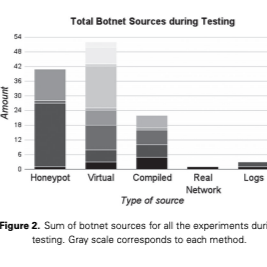
Botnets are an important security problem on the Internet. They continuously evolve their structure, protocols and attacks. This survey analyzes and compares the most important efforts carried out in a network‐based detection area.

During the last couple of years there has been an important surge on the use of HTTPs by malware. The reason for this increase is not completely understood yet, but it is hypothesized that it was forced by organizations only allowing web traffic to the Internet. Using HTTPs makes malware behavior similar to normal connections. Therefore, there has been a growing interest in understanding the usage of HTTPs by malware. This paper describes our research to obtain large quantities of real malware traffic using HTTPs, our use of man-in-the-middle HTTPs interceptor proxies to open and study the content, and our analysis of how the behavior of the malware changes after being intercepted. The research goal is to understand how malware uses HTTPs and the impact of intercepting its traffic. We conclude that the use of an interceptor proxy forces the malware to change its behavior and therefore should be carefully considered before being implemented.
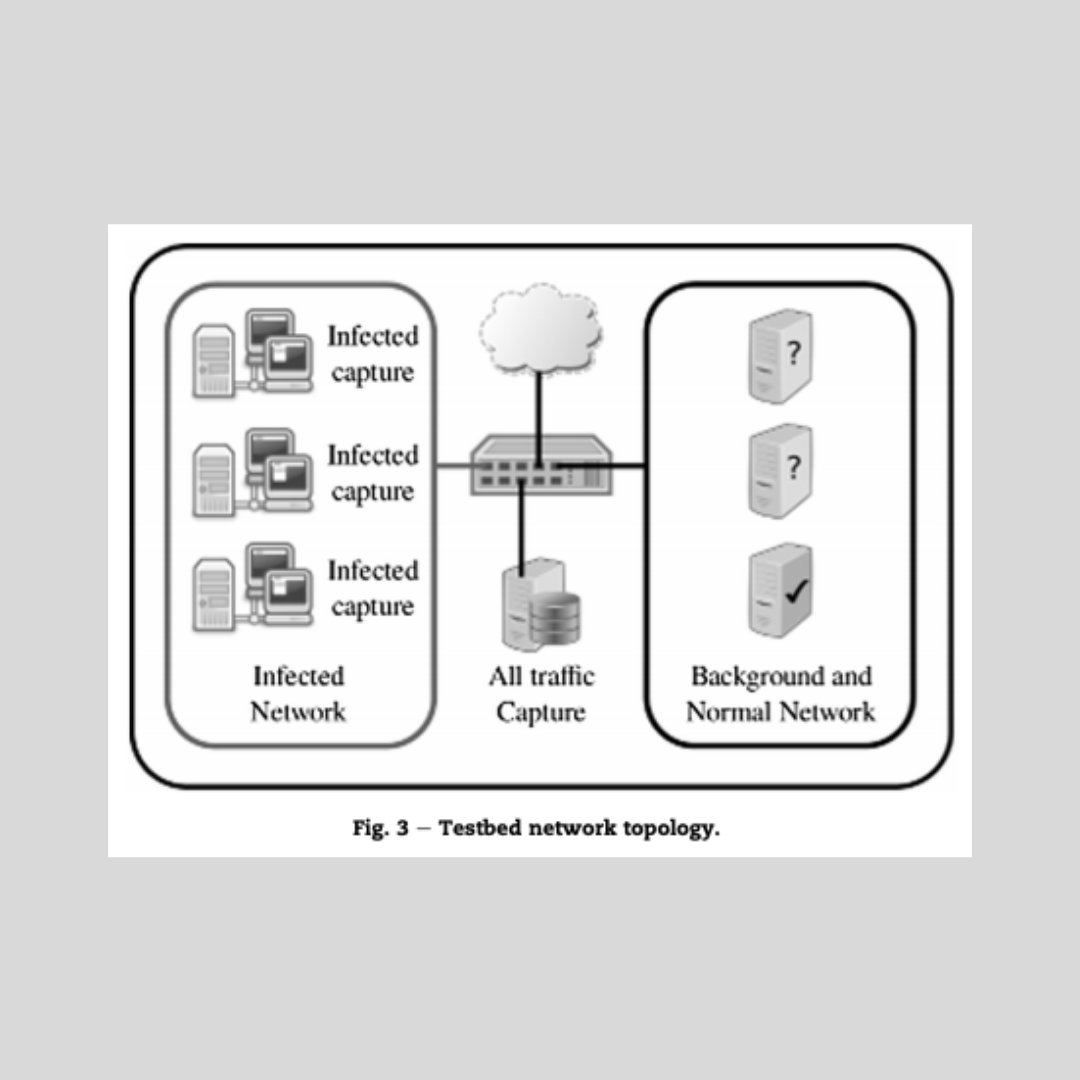
The results of botnet detection methods are usually presented without any comparison. Although it is generally accepted that more comparisons with third-party methods may help to improve the area, few papers could do it. Among the factors that prevent a comparison are the difficulties to share a dataset, the lack of a good dataset, the absence of a proper description of the methods and the lack of a comparison methodology. This paper compares the output of three different botnet detection methods by executing them over a new, real, labeled and large botnet dataset.

Botnets are an important security problem on the Internet. They continuously evolve their structure, protocols and attacks. This survey analyzes and compares the most important efforts done in the network-based detection area. It accomplishes four tasks: first, the comparison of previous surveys and the proposal of four new dimensions to analyze their classification schemes. Second, a new classification and comparison of network-based botnet detection proposals, that includes the definition of twenty desired properties of every botnet detection paper. Third, an extensive comparison between the most representative detection proposals. Fourth, the description of the most important problems and highlights in the area. We conclude that the area has achieved great advances so far, but there are still many open problems.

In the last years there has been an increase in the amount of malware using HTTPS traffic for their communications. This situation pose a challenge for the security analysts because the traffic is encrypted and because it mostly looks like normal traffic. Therefore, there is a need to discover new features and methods to detect malware without decrypting the traffic. A detection method that does not need to unencrypt the traffic is cheaper (because no traffic interceptor is needed), faster and private, respecting the original idea of HTTPS. The goal of this thesis is to detect HTTPS malware connections by extracting new features and using data from the Bro IDS program. Since the data for the research is hard to come by, we used data from the Stratosphere project and we created, by hand, our own datasets. Our unit of analysis is an aggregation of all the information that is possible to obtain without decrypting the data. We group together flows, SSL data and X.509 certificates data as they are generated by Bro. To classify the HTTPS malware traffic we used several algorithms, such as Neural Networks, XGBoost and Random Forest. Our results show that the HTTPS malware behaviour is distinct from normal HTTPS behaviour and that our methods are able to separate them with an accuracy of at least 96.64%.


Large Language Models (LLMs) have gained widespread popularity across diverse domains involving text generation, summarization, and various natural language processing tasks. Despite their inherent limitations, LLM-based designs have shown promising capabilities in planning and navigating open-world scenarios. This paper introduces a novel application of pre-trained LLMs as agents within cybersecurity network environments, focusing on their utility for sequential decision-making processes.
There are very few SotA deception systems based on Large Language Models. The existing ones are limited only to simulating one type of service, mainly SSH shells. These systems - but also the deception technologies not based on LLMs - lack an extensive evaluation that includes human attackers. Generative AI has recently become a valuable asset for cybersecurity researchers and practitioners, and the field of cyber-deception is no exception. Researchers have demonstrated how LLMs can be leveraged to create realistic-looking honeytokens, fake users, and even simulated systems that can be used as honeypots.

Emerging studies demonstrate that machine learning (ML) has the potential to improve the detection capabilities of network intrusion detection systems (NIDS) against evolving cyber threats. However, recent adversarial ML (AML) studies have revealed critical ML vulnerabilities. This paper presents innovative multistage red-teaming techniques to evaluate the robustness of ML-NIDS in real-world adversarial settings.

Domain Generation Algorithms (DGAs) are malicious techniques used by malware to dynamically generate seemingly random domain names for communication with Command & Control (C&C) servers. Due to the fast and simple generation of DGA domains, detection methods must be highly efficient and precise to be effective. Large Language Models (LLMs) have demonstrated their proficiency in real-time detection tasks, making them ideal candidates for detecting DGAs. Our work validates the effectiveness of fine-tuned LLMs for detecting DGAs and DNS exfiltration attacks. We developed LLM models and conducted comprehensive evaluation using a diverse dataset comprising 59 distinct real-world DGA malware families and normal domain data. Our LLM model significantly outperformed traditional natural language processing techniques, especially in detecting unknown DGAs. We also evaluated its performance on DNS exfiltration datasets, demonstrating its effectiveness in enhancing cybersecurity measures. To the best of our knowledge, this is the first work that empirically applies LLMs for DGA and DNS exfiltration detection.

Understanding cybercrime communications is paramount for cybersecurity defence. This often involves translating communications into English for processing, interpreting, and generating timely intelligence. The problem is that translation is hard. Human translation is slow, expensive, and scarce. Machine translation is inaccurate and biased. We propose using fine-tuned Large Language Models (LLM) to generate translations that can accurately capture the nuances of cybercrime language. We apply our technique to public chats from the NoName057(16) Russian-speaking hacktivist group. Our results show that our fine-tuned LLM model is better, faster, more accurate, and able to capture nuances of the language. Our method shows it is possible to achieve high-fidelity translations and significantly reduce costs by a factor ranging from 430 to 23,000 compared to a human translator.

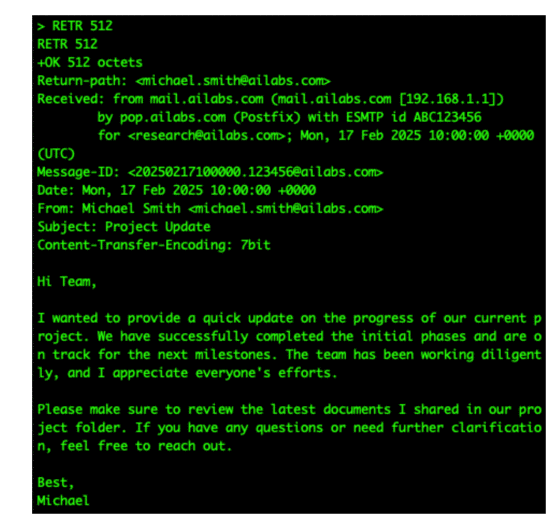
Honeypots are essential tools in cybersecurity for early detection, threat intelligence gathering, and analysis of attacker's behavior. However, most of them lack the required realism to engage and fool human attackers long-term. Being easy to distinguish honeypots strongly hinders their effectiveness. This can happen because they are too deterministic, lack adaptability, or lack deepness. This work introduces shelLM, a dynamic and realistic software honeypot based on Large Language Models that generates Linux-like shell output. We designed and implemented shelLM using cloud-based LLMs. We evaluated if shelLM can generate output as expected from a real Linux shell. The evaluation was done by asking cybersecurity researchers to use the honeypot and give feedback if each answer from the honeypot was the expected one from a Linux shell. Results indicate that shelLM can create credible and dynamic answers capable of addressing the limitations of current honeypots. ShelLM reached a TNR of 0.90, convincing humans it was consistent with a real Linux shell. The source code and prompts for replicating the experiments have been publicly available.

The domain of digital networking has witnessed a lot of advancements, one of which is peer-to-peer (P2P) networks for file sharing. These networks gained significant traction with the success of Napster, BitTorrent, Gnutella, and Kazaa [13]. P2P networks offer enhanced scalability and resilience by eliminating the need to go through a server [24]. While the P2P network has transformed the file-sharing landscape, the main challenge these networks face is the ability to determine their peers’ trustworthiness accurately.

Large Language Models (LLMs) have demonstrated remarkable capabilities in various tasks, but their potential in cybersecurity remains largely unexplored. Despite their inherent limitations, LLM-based designs have shown promising ability in planning and navigating open-world scenarios. This paper investigates the application of pre-trained LLMs as agents in network security environments, a domain traditionally dominated by reinforcement learning (RL) approaches. We introduce a novel method that leverages LLMs for sequential decision-making in cybersecurity scenarios, that is flexible and does not need re-training to adapt to new scenarios.

Deciding which XAI technique is best depends not only on the domain, but also on the given task, the dataset used, the model being explained, and the target goal of that model. We argue that the evaluation of XAI methods has not been thoroughly analyzed in the network security domain, which presents a unique type of challenge. While there are XAI methods applied in network security there is still a large gap between the needs of security stakeholders and the selection of the optimal method. We propose to approach the problem by first defining the stack-holders in security and their prototypical tasks. Each task defines inputs and specific needs for explanations. Based on these explanation needs (eg understanding the performance, or stealing a model), we created five XAI evaluation techniques that are used to compare and select which XAI method is best for each task (dataset, model, and goal). Our proposed approach was evaluated by running experiments for different security stakeholders, machine learning models, and XAI methods. Results were compared with the AutoXAI technique and random selection. Results show that our proposal to evaluate and select XAI methods for network security is well-grounded and that it can help AI security practitioners find better explanations for their given tasks.

Due to the proliferation of malware, defenders are increasingly turning to automation and machine learning as part of the malware detection toolchain. However, machine learning models are susceptible to adversarial attacks, requiring the testing of model and product robustness. Meanwhile, attackers also seek to automate malware generation and evasion of antivirus systems, and defenders try to gain insight into their methods. This work proposes a new algorithm that combines Malware Evasion and Model Extraction (MEME) attacks. MEME uses model-based reinforcement learning to adversarially modify Windows executable binary samples while simultaneously training a surrogate model with a high agreement with the target model to evade. To evaluate this method, we compare it with two state-of-the-art attacks in adversarial malware creation, using three well-known published models and one antivirus product as targets. Results show that MEME outperforms the state-of-the-art methods in terms of evasion capabilities in almost all cases, producing evasive malware with an evasion rate in the range of 32–73%. It also produces surrogate models with a prediction label agreement with the respective target models between 97–99%. The surrogate could be used to fine-tune and improve the evasion rate in the future.

DNS over HTTPS (DoH) is one of the standards to protect the security and privacy of users. The choice of DoH provider has controversial consequences, from monopolisation of surveillance to lost visibility by network administrators and security providers. More importantly, it is a novel security business. Software products and organisations depend on users choosing well-known and trusted DoH resolvers. However, there is no comprehensive study on the number of DoH resolvers on the Internet, its growth, and the trustworthiness of the organisations behind them. This paper studies the deployment of DoH resolvers by (i) scanning the whole Internet for DoH resolvers in 2021 and 2022; (ii) creating lists of well-known DoH resolvers by the community; (iii) characterising what those resolvers are, (iv) comparing the growth and differences. Results show that (i) the number of DoH resolvers increased 4.8 times in the period 2021–2022, (ii) the number of organisations providing DoH services has doubled, and (iii) the number of DoH resolvers in 2022 is 28 times larger than the number of well-known DoH resolvers by the community. Moreover, 94% of the public DoH resolvers on the Internet are unknown to the community, 77% use certificates from free services, and 57% belong to unknown organisations or personal servers. We conclude that the number of DoH resolvers is growing at a fast rate; also that at least 30% of them are not completely trustworthy and users should be very careful when choosing a DoH resolver.

Malware authors constantly obfuscate their files and defenders regularly develop new techniques to detect them. Given this cat-and-mouse game, specialized obfuscation services have appeared in the cybercrime industry. These services allow malware authors to obfuscate their code for a fee. This study investigates an automated obfuscation-as-a-service platform for Android applications and yields unique insights on the technical difficulties and business reality of those behind such a specialized service. The service investigated was found to be average in quality, mainly using known obfuscation techniques, and generating obfuscated applications that were still detected by anti-viruses. It had a small clientele of large-scale attackers who used the service to decrease anti-virus detections of highly malicious applications, thus increasing their chances of compromising devices. Depending on the price bundles considered, operators offering the service were estimated to have made a minimum revenue ranging from USD 5,100 (conservative) to USD 61,160 (optimistic) for a six-month operation. This study illustrates that even though obfuscation-as-a-service is a market niche, taking advantage of the value added from this specialization is not effortless nor easily accessible to everyone involved in cybercrime.
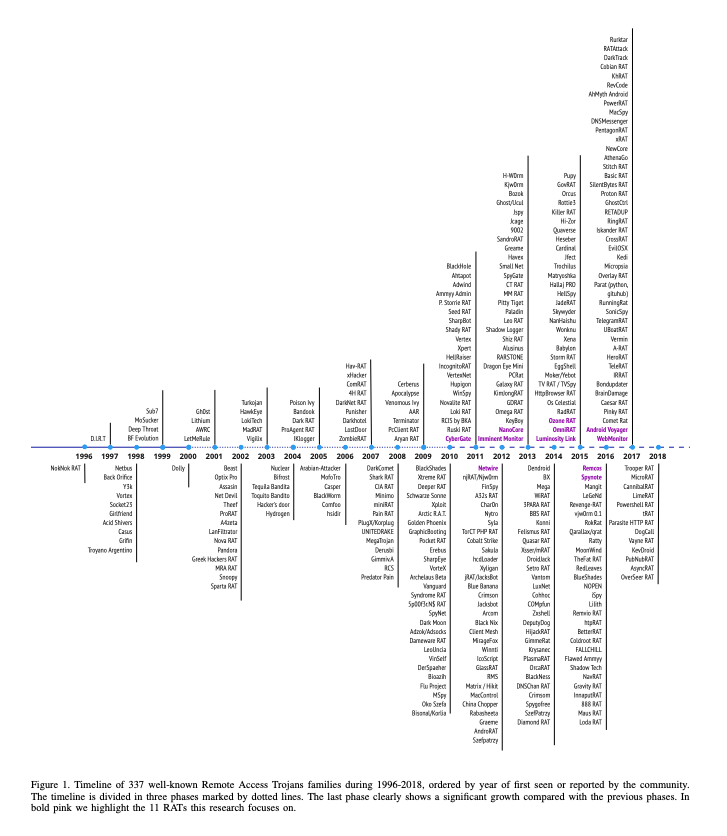
In the last three decades there have been significant changes in the cybercrime world in terms of organization, type of attacks, and tools. Remote Access Trojans (RAT) are an intrinsic part of traditional cybercriminal activities but they have become a standard tool in advanced espionage and scams attacks. The overly specialized research in our community on Remote Access Trojans has resulted in a seemingly lack of general perspective and understanding on how RATs have evolved as a phenomenon. This work presents a new generalist perspective on Remote Access Trojans, an analysis of their growth in the last 30 years, and a discussion on how they have become a commodity in the last decade. We found that the amount of RATs increased drastically in the last ten years and that nowadays they have become standardized commodity products that are no very different from each other.

Honeypots have been a long-established form of passive defense in a wide variety of systems. They are often used for the reliability and low false positive rate. However, the deployment of honeypots in the Active Directory (AD) systems is still limited. Intrusion detection in AD systems is a difficult task due to the complexity of the system and its design, where any authenticated account is able to query other entities in the system. Therefore, the positioning of the honeypot in such structures brings two main con trains: (i) the placement has to be organic, with similar properties to other, real entities in the structure, and (ii) the placement must not give away the nature of the honeypot to the attacker.

Ensemble learning techniques have been successfully proposed and used to improve threats detection in cybersecurity. These techniques usually improve the detection results by combining algorithms that together have less errors. However there has not been any ensemble learning algorithm used to classify network flows when several methods are used to give individual detections for each of the flows.

El crecimiento vertiginoso de nuevas tecnologıas, trae aparejado el crecimiento de aplicaciones maliciosas. Estas aplicaciones hacen uso de los recursos de los dispositivos infectados para realizar actividades ilıcitas, enviar mails de forma masiva (spam) o minar para obtener criptomonedas. Para minar, se requiere grandes capacidades de cómputo Las botnets pueden ser consideradas como un tipo de de aplicación de computación distribuıda. La palabra botnet significa red de robots. Es un tipo de malware, instalado en una computadora que ha sido infectada, con la habilidad de auto propagarse hacia otras máquinas. Todas las computadoras infectadas conforman la “red de bots”, o botnet. Este tipo de malware utiliza los recursos de la computadora infectad (CPU, RAM, ancho de banda), para comunicarse con su Botnet Master, que es quien le da órdenes. El presente trabajo es un estado del arte, se analiza el comportamiento de las botnets como aplicaciones de computación distribuıda. Se considera el comportamiento a nivel de consumo de recursos de los dispositivos que son infectados por el malware, en particular los miners.

A normal computer infected with malware is difficult to detect. There have been several approaches in the last years which analyze the behavior of malware and obtain good results. The malware traffic may be detected, but it is very common to miss-detect normal traffic as malicious and generate false positives. This is specially the case when the methods are tested in real and large networks. The detection errors are generated due to the malware changing and rapidly adapting its domains and patterns to mimic normal connections.
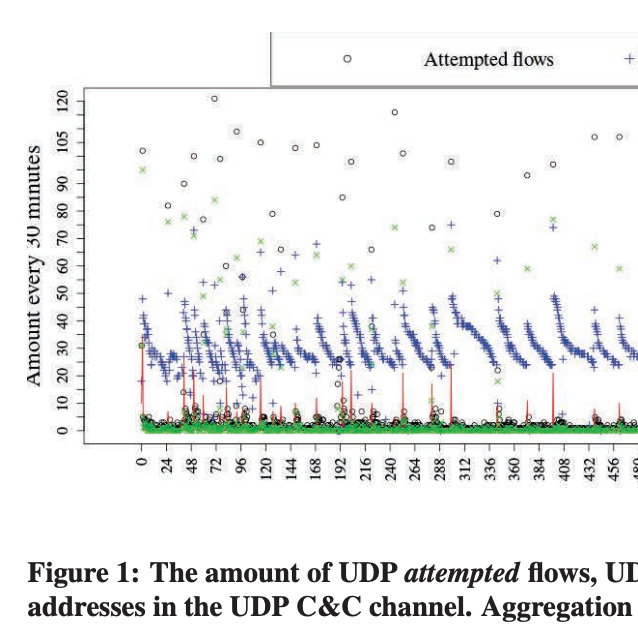
Through the analysis of a long-term botnet capture, we identified and modeled the behaviors of its C&C channels. They were found and characterized by periodicity analyses and statistical representations. The relationships found between the behaviors of the UDP, TCP and HTTP C&C channels allowed us to unify them in a general model of the botnet behavior. Our behavioral analysis of the C&C channels gives a new perspective on the modeling of malware behavior, helping to better understand botnets.


In this paper we describe the main ensemble learning techniques and their application in the cybersecurity threats detection. The state of the art in the use of ensemble learning techniques is presented here as an alternative to the current intrusion detection mechanisms, analyzing their advantages and disadvantages. We propose to incorporate ensemble learning to SLIPS [3], a behavioral-based intrusion detection and prevention system that uses machine learning algorithms to detect malicious behaviors, to obtain better results, taking advantage of the benefits of the SLIPS classifiers and modules. As part of this work we extend ensembling by considering algorithms from different domains (not machine learning domains), as Thread Intelligence. As a first stage of this project, performance tests of ensemble learning algorithms were performed to detect malware from flows evaluating its accuracy. The results of these tests are presented here, as well as the conclusions obtained and the future work.

Domain Name Service is a central part of Internet regular operation. Such importance has made it a common target of different malicious behaviors such as the application of Domain Generation Algorithms (DGA) for command and control a group of infected computers or Tunneling techniques for bypassing system administrator restrictions. A common detection approach is based on training different models detecting DGA and Tunneling capable of performing a lexicographic discrimination of the domain names. However, since both DGA and Tunneling showed domain names with observable lexicographical differences with normal domains, it is reasonable to apply the same detection approach to both threats. In the present work, we propose a multi-class convolutional network (MC-CNN) capable of detecting both DNS threats. The resulting MC-CNN is able to detect correctly 99% of normal domains, 97% of DGA and 92% of Tunneling, with a False Positive Rate of 2.8%, 0.7% and 0.0015% respectively and the advantage of having 44% fewer trainable parameters than similar models applied to DNS threats detection.

This paper describes the rare discovery of a new Android banking botnet, named Geost, from the operational security failures of its botmaster. They made many mistakes, including using the illegal proxy network of the HtBot malware, not encrypting their Command and Control servers, re-using security services, trusting other attackers with less operational security, and not encrypting chat sessions.

Reports on cyber espionage operations have been on the rise in the last decade. However, operations in Latin America are heavily under researched and potentially underestimated. In this paper we analyze and dissect a cyber espionage tool known as Machete. Our research shows that Machete is operated by a highly coordinated and organized group who focuses on Latin American targets. We describe the five phases of the APT operations from delivery to exfiltration of information and we show why Machete is considered a cyber espionage tool. Furthermore, our analysis indicates that the targeted victims belong to military, political, or diplomatic sectors. The review of almost six years of Machete operations show that it is likely operated by a single group, and their activities are possibly state-sponsored. Machete is still active and operational to this day.

A Domain Generation Algorithm (DGA) is an algorithm to generate domain names in a deterministic but seemly random way. Malware use DGAs to generate the next domain to access the Command & Control (C&C) communication server. Given the simplicity of the generation process and speed at which the domains are generated, a fast and accurate detection method is required. Convolutional neural network (CNN) are well known for performing real-time detection in fields like image and video recognition. Therefore, they seemed suitable for DGA detection. The present work provides an analysis and comparison of the detection performance of a CNN for DGA detection. A CNN with a minimal architecture complexity was evaluated on a dataset with 51 DGA malware families and normal domains. Despite its simple architecture, the resulting CNN model correctly detected more than 97% of total DGA domains with a false positive rate close to 0.7%.

A Domain Generation Algorithm (DGA) is an algorithm to generate domain names in a deterministic but seemly random way. Malware use DGAs to generate the next domain to access the Command Control (C&C) communication channel. Given the simplicity and velocity associated to the domain generation process, machine learning detection methods emerged as suitable detection solution. However, since the periodical retraining becomes mandatory, a fast and accurate detection method is needed. Convolutional neural network (CNN) are well known for performing real-time detection in fields like image and video recognition. Therefore, they seem suitable for DGA detection. The present work is a preliminary analysis of the detection performance of CNN for DGA detection. A CNN with a minimal architecture complexity was evaluated on a dataset with 51 DGA malware families as well as normal domains. Despite its simple architecture, the resulting CNN model correctly detected more than 97% of total DGA domains with a false positive rate close to 0.7%.

Generative Adversarial Networks (GANs) have been successfully used in a large number of domains. This paper proposes the use of GANs for generating network traffic in order to mimic other types of traffic. In particular, our method modifies the network behavior of a real malware in order to mimic the traffic of a legitimate application, and therefore avoid detection. By modifying the source code of a malware to receive parameters from a GAN, it was possible to adapt the behavior of its Command and Control (C2) channel to mimic the behavior of Facebook chat network traffic. In this way, it was possible to avoid the detection of new-generation Intrusion Prevention Systems that use machine learning and behavioral characteristics. A real-life scenario was successfully implemented using the Stratosphere behavioral IPS in a router, while the malware and the GAN were deployed in the local network of our laboratory, and the C2 server was deployed in the cloud. Results show that a GAN can successfully modify the traffic of a malware to make it undetectable. The modified malware also tested if it was being blocked and used this information as a feedback to the GAN. This work envisions the possibility of self-adapting malware and self-adapting IPS.

Machine learning has become one of the go-to methods for solving problems in the field of networking. This development is driven by data availability in large-scale networks and the commodification of machine learning frameworks. While this makes it easier for researchers to implement and deploy machine learning solutions on networks quickly, there are a number of vital factors to account for when using machine learning as an approach to a problem in networking and translate testing performance to real networks deployments successfully. This paper, rather than presenting a particular technical result, discusses the necessary considerations to obtain good results when using machine learning to analyze network-related data.

Some botnets use special algorithms to generate the domain names they need to connect to their command and control servers. They are refereed as Domain Generation Algorithms. Domain Generation Algorithms generate domain names and tries to resolve their IP addresses. If the domain has an IP address, it is used to connect to that command and control server. Otherwise, the DGA generates a new domain and keeps trying to connect. In both cases it is possible to capture and analyze the special behavior shown by those DNS packets in the network. The behavior of Domain Generation Algorithms is difficult to automatically detect because each domain is usually randomly generated and therefore unpredictable. Hence, it is challenging to separate the DNS traffic generated by malware from the DNS traffic generated by normal computers. In this work we analyze the use of behavioral detection approaches based on Markov Models to differentiate Domain Generation Algorithms traffic from normal DNS traffic. The evaluation methodology of our detection models has focused on a real-time approach based on the use of time windows for reporting the alerts. All the detection models have shown a clear differentiation between normal and malicious DNS traffic and most have also shown a good detection rate. We believe this work is a further step in using behavioral models for network detection and we hope to facilitate the development of more general and better behavioral detection methods of malware traffic.

This research provides the first overview of such automatic service, which takes advantage of the whole malware-as-aservice industry, providing medium quality obfuscation for the Android malware market. Although the technical obfuscations are not state-of-the-art, the service succeeds in reducing detection for malicious Android applications. We conclude that the active use of the service highlights the need for the malware market to develop better obfuscation techniques, hence the good job that the security community is doing at quickly detecting changing malware. We also conclude that this service seemed to generate enough revenue for the group, given its automatic nature and purpose. Given that automatic services like this may be a greater problem in the future of malware obfuscation, this research provides a first technical analysis of the details of such obfuscation service and the possible impact in detection results.
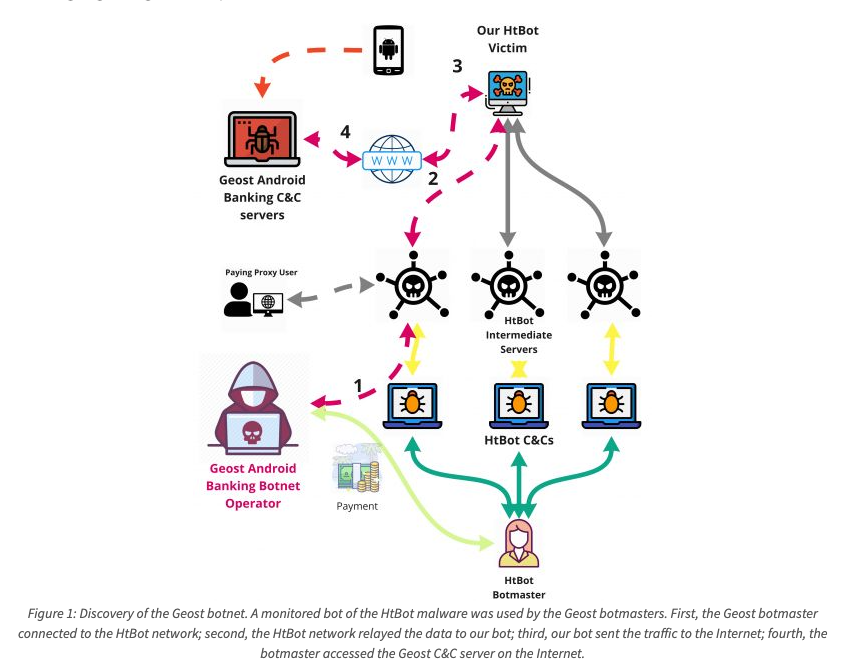
This paper describes an ew botnet, which we called Geost, discovered thanks to multiple OpSec mistakes made by the attackers. The mistakes included: the use of the HtBot malware’s illegal proxy network; failing to encrypt the command-and-control servers; re-using security services; trusting other attackers that practise even less operational security; and failing to encrypt chat sessions. As far as we know, the Geost botnet has hundreds of malicious domains, 13 C&C servers, approximately 800,000 victims in Russia, and potential access to several million Euros in bank accounts.
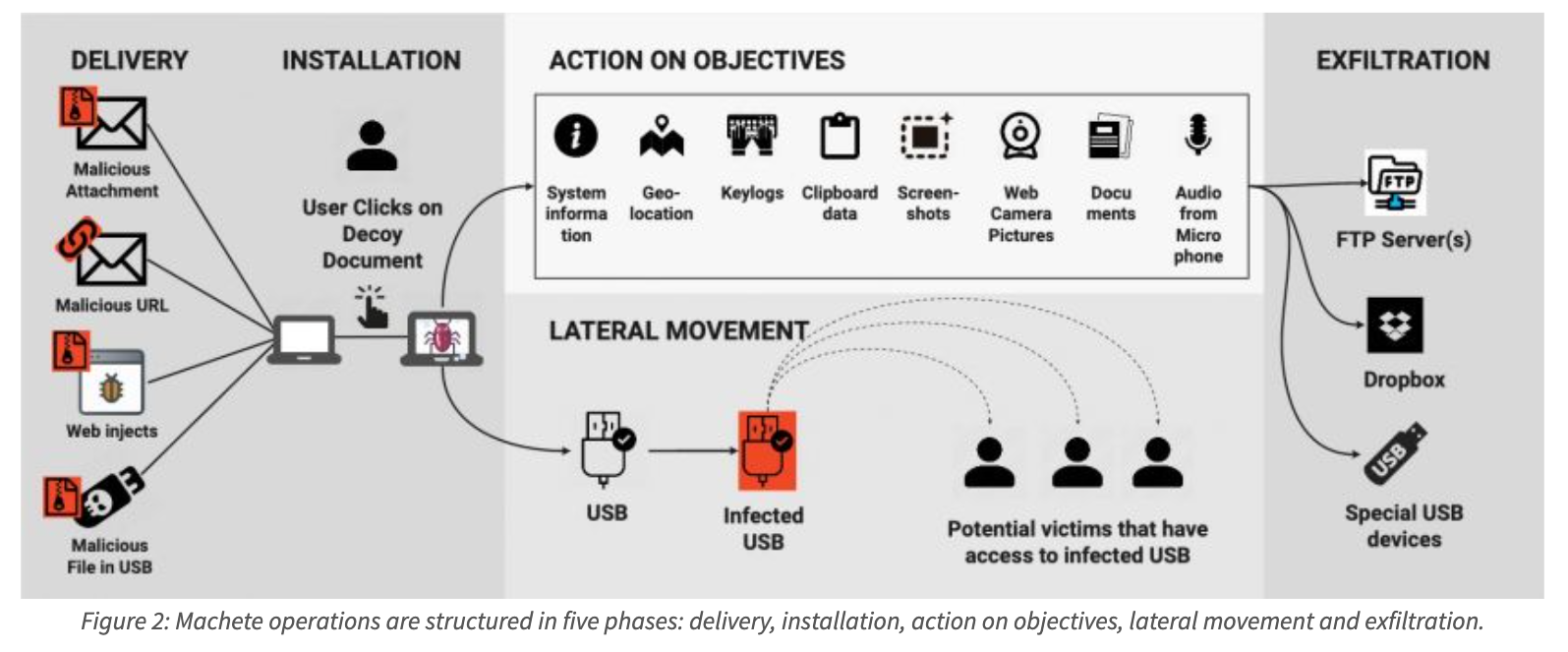
Our research shows that Machete is operated by a highly coordinated and organized group that focuses on Latin American targets. We describe the five phases of the APT operations from delivery to exfiltration of information and we show why Machete is considered a cyber espionage tool. Furthermore, our analysis indicates that the targeted victims belong to military, political or diplomatic sectors. The review of the almost eight years of Machete operations shows that it is probably operated by a single group whose activities may be state-sponsored. Machete is still active and operational to this day.

Current malware traffic detection solutions work mostly by using static fingerprints, white and black lists and crowd-sourced threat intelligence analytics. These methods are useful for detecting known malware in real time, but are insufficient for detecting unknown malicious trends and attacks. Our proposed complementary solution is to analyse the inherent patterns of malware actions in the network by means of machine learning algorithms. In particular, we use Markov chains-based algorithms to find network patterns that are independent of static features, such as IP addresses or payloads.

Generative Adversarial Networks (GANs) are a recent invention that shows impressive results in generating completely new images of faces, building interiors and much more. In this talk we present how we can use GANs to modify network traffic parameters in order to mimic other types of traffic. More specifically, we modify an open source malware to use a GAN to dynamically adapt its Command and Control network behavior and mimic the traffic characteristics of Facebook chat. In this way it is able to avoid the detection from new-generation Intrusion Prevention Systems that use behavioral characteristics. We will present our experiments from a real-life scenario that used the Stratosphere behavioral IPS deployed in a router between the malware which was deployed in our lab and the C&C server deployed in AWS. Results show that it is possible for the malware to become undetected when given the input parameters from a GAN. The malware is also aware of whether or not it is being blocked and uses this as a feedback signal in order to improve the GAN model. Finally, we discuss the implications of this work in malware detection as well as other areas such as censorship circumvention.

The network patterns of Targeted Attacks is very different from the usual malware because of the different attacker’s goals. Therefore, it is difficult to detect targeted attacks looking for DNS anomalies, DGA traffic or HTTP patterns. However, our analysis of targeted attacks reveals novel patterns in their network communication. These patterns were incorporated into our Stratosphere IPS in order to model, identify and detect the traffic of targeted attacks. With this knowledge it is possible to alert attacks in the network within a short time, independently of the malware used. The Stratosphere project analyzes the inherent patterns of malware actions in the network using Machine Learning. It uses Markov Chains algorithms to find patterns that are independent of static features. These patterns are used to build behavioral models of malware actions that are later used to detect similar traffic in the network. The tool and datasets are freely published.

Current malware traffic detection solutions work mostly by using static fingerprints, white and black lists and crowd-sourced threat intelligence analytics. These methods are useful for detecting known malware in real time, but are insufficient for detecting unknown malicious trends and attacks. Our proposed complementary solution is to analyse the inherent patterns of malware actions in the network by means of machine learning algorithms. In particular, we use Markov chains-based algorithms to find network patterns that are independent of static features, such as IP addresses or payloads. These patterns are used to build behavioural models of malware actions that are later used to detect similar traffic in the network. All these models and detection algorithms have been used to create a free software intrusion prevention system called Stratosphere IPS, which has been thoroughly tested with normal and malware traffic. The IPS is able to detect new network patterns that are similar to known malicious behaviours. The Stratosphere IPS tool will be used to show how behavioural models can detect real malware traffic.
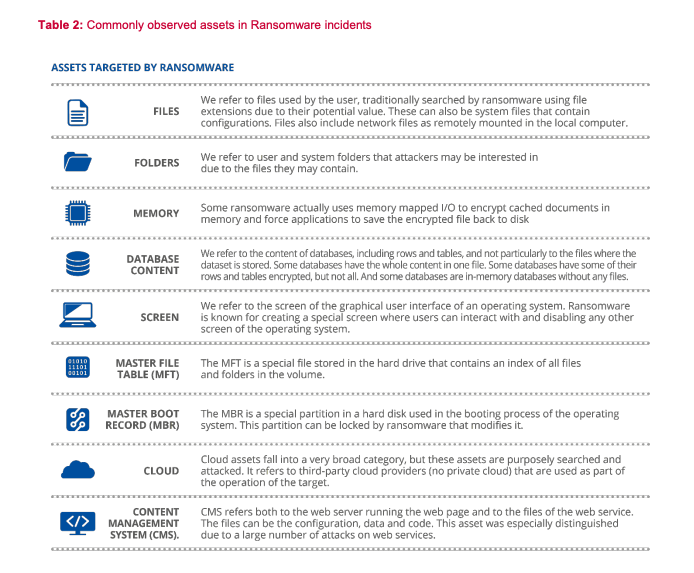
This report aims to bring new insights into the reality of ransomware incidents through mapping and studying ransomware incidents from May 2021 to June 2022. Based on the findings, ransomware has adapted and evolved, becoming more efficient and causing more devastating attacks.
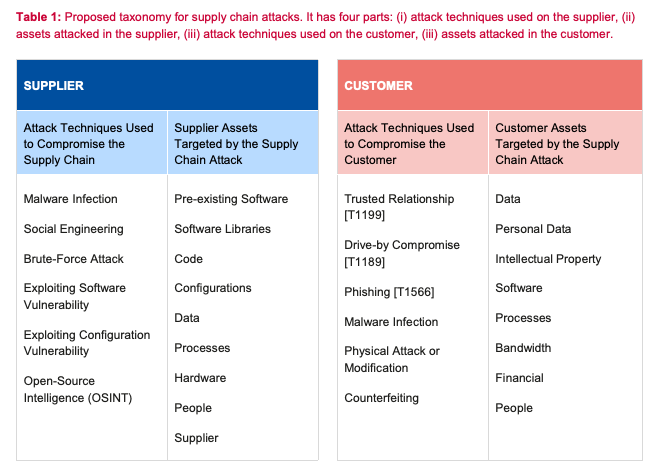
This report aims at mapping and studying the supply chain attacks that were discovered from January 2020 to early July 2021. Based on the trends and patterns observed, supply chain attacks increased in number and sophistication in the year 2020 and this trend is continuing in 2021, posing an increasing risk for organizations. It is estimated that there will be four times more supply chain attacks in 2021 than in 2020. With half of the attacks being attributed to Advanced Persistence Threat (APT) actors, their complexity and resources greatly exceed the more common non-targeted attacks, and, therefore, there is an increasing need for new protective methods that incorporate suppliers in order to guarantee that organizations remain secure.
Autonomous intelligent agents offer a transformative approach to cyber defense by operating independently in complex and dynamic environments. While much research has focused on defensive systems, offensive agents are equally important for testing system resilience and improving defenses through realistic adversarial interaction. Recent advances demonstrate that large language models can automate penetration testing effectively, rivaling traditional reinforcement learning methods, but their reliance on cloud-based services introduces significant concerns around privacy and reproducibility.