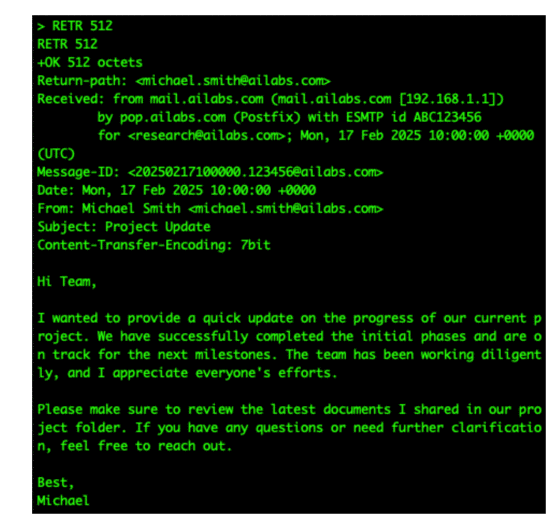
There are very few SotA deception systems based on Large Language Models. The existing ones are limited only to simulating one type of service, mainly SSH shells. These systems - but also the deception technologies not based on LLMs - lack an extensive evaluation that includes human attackers. Generative AI has recently become a valuable asset for cybersecurity researchers and practitioners, and the field of cyber-deception is no exception. Researchers have demonstrated how LLMs can be leveraged to create realistic-looking honeytokens, fake users, and even simulated systems that can be used as honeypots.
CTU Hornet 65 Niner: A Network Dataset of Geographically Distributed Low-Interaction Honeypots
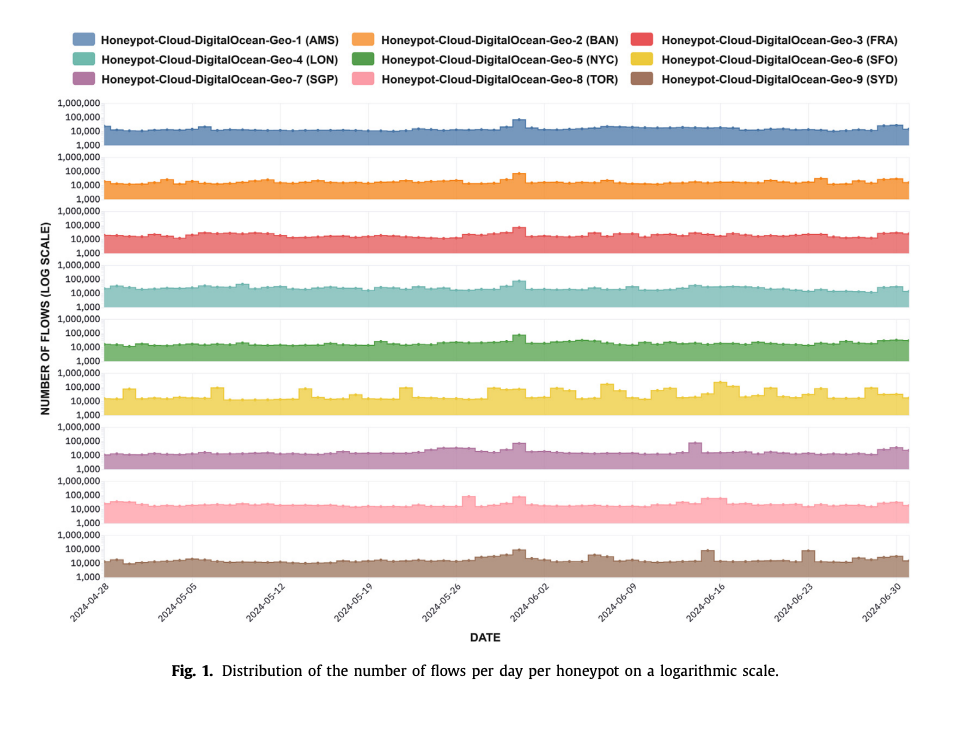
This data article introduces a new network dataset created to help understand how geographical location impacts the quality, type, and amount of incoming network attacks received by honeypots. The dataset consists of 12.4 million network flows collected from nine low-interaction honeypots in nine cities across the world for 65 days, from April 29th to July 1st, 2024. Each low-interaction honeypot was identically configured to capture incoming attacks using a state-of-the-art network flow collector, Zeek. Honeypots were distributed in nine cities: Amsterdam, Bangalore, Frankfurt, London, New York, San Francisco, Singapore, Toronto, and Sydney. The dataset is in JSON format and contains all types of Zeek network flow files, including protocol-specific logs.
DeepRed: A Deep Learning–Powered Command and Control Framework for Multi-Stage Red Teaming Against ML-based Network Intrusion Detection Systems
Emerging studies demonstrate that machine learning (ML) has the potential to improve the detection capabilities of network intrusion detection systems (NIDS) against evolving cyber threats. However, recent adversarial ML (AML) studies have revealed critical ML vulnerabilities. This paper presents innovative multistage red-teaming techniques to evaluate the robustness of ML-NIDS in real-world adversarial settings.
Towards Better Understanding of Cybercrime: The Role of Fine-Tuned LLMs in Translation
Understanding cybercrime communications is paramount for cybersecurity defence. This often involves translating communications into English for processing, interpreting, and generating timely intelligence. The problem is that translation is hard. Human translation is slow, expensive, and scarce. Machine translation is inaccurate and biased. We propose using fine-tuned Large Language Models (LLM) to generate translations that can accurately capture the nuances of cybercrime language. We apply our technique to public chats from the NoName057(16) Russian-speaking hacktivist group. Our results show that our fine-tuned LLM model is better, faster, more accurate, and able to capture nuances of the language. Our method shows it is possible to achieve high-fidelity translations and significantly reduce costs by a factor ranging from 430 to 23,000 compared to a human translator.
LLM in the Shell: Generative Honeypots
Honeypots are essential tools in cybersecurity for early detection, threat intelligence gathering, and analysis of attacker's behavior. However, most of them lack the required realism to engage and fool human attackers long-term. Being easy to distinguish honeypots strongly hinders their effectiveness. This can happen because they are too deterministic, lack adaptability, or lack deepness. This work introduces shelLM, a dynamic and realistic software honeypot based on Large Language Models that generates Linux-like shell output. We designed and implemented shelLM using cloud-based LLMs. We evaluated if shelLM can generate output as expected from a real Linux shell. The evaluation was done by asking cybersecurity researchers to use the honeypot and give feedback if each answer from the honeypot was the expected one from a Linux shell. Results indicate that shelLM can create credible and dynamic answers capable of addressing the limitations of current honeypots. ShelLM reached a TNR of 0.90, convincing humans it was consistent with a real Linux shell. The source code and prompts for replicating the experiments have been publicly available.
Hornet 40: Network Dataset of Geographically Placed Honeypots
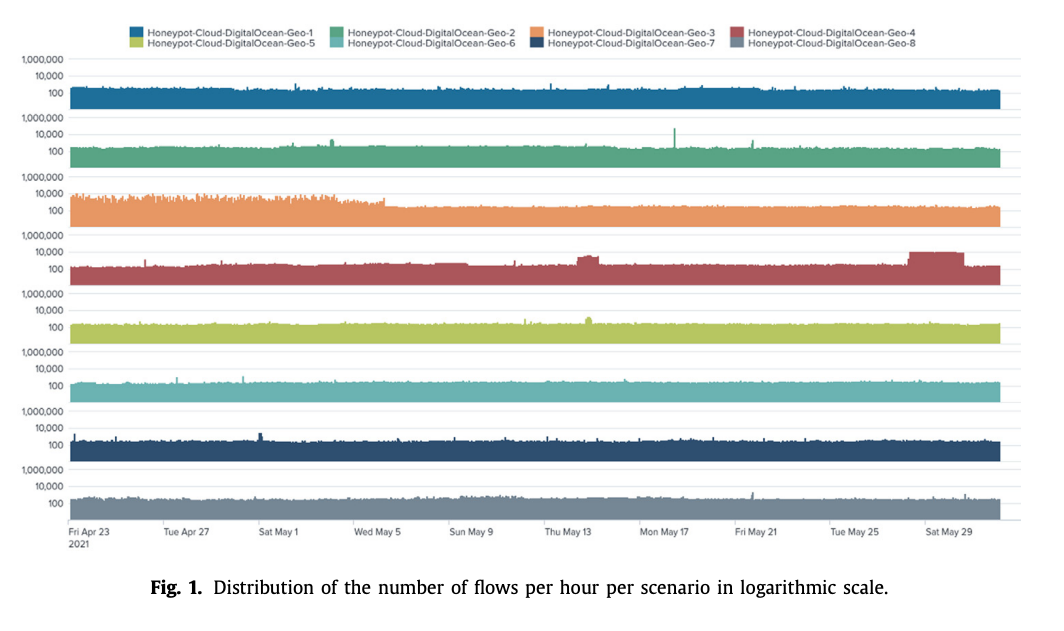
Deception technologies, and honeypots in particular, have been used for decades to understand how cyber attacks and attackers work. A myriad of factors impact the effectiveness of a honeypot. However, very few is known about the impact of the geographical location of honeypots on the amount and type of attacks. Hornet 40 is the first dataset designed to help understand how the geolocation of honeypots may impact the inflow of network attacks. The data consists of network flows in binary and text format, with up to 118 features, including 480 bytes of the content of each flow. They were created using the Argus flow collector. The passive honeypots are IP addresses connected to the Internet and do not have any honeypot software running, so attacks are not interactive. The data was collected from identically configured honeypot servers in eight locations: Amsterdam, Bangalore, Frankfurt, London, New York, San Francisco, Singapore, and Toronto. The dataset contains over 4.7 million network flows collected during forty days throughout April, May, and June 2021.
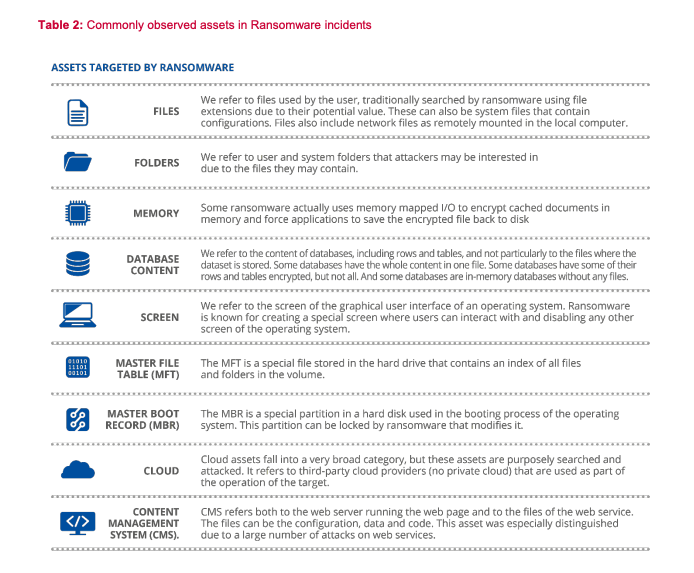
ENISA Threat Landscape for Ransomware Attacks
ENISA Threat Landscape for Supply Chain Attacks
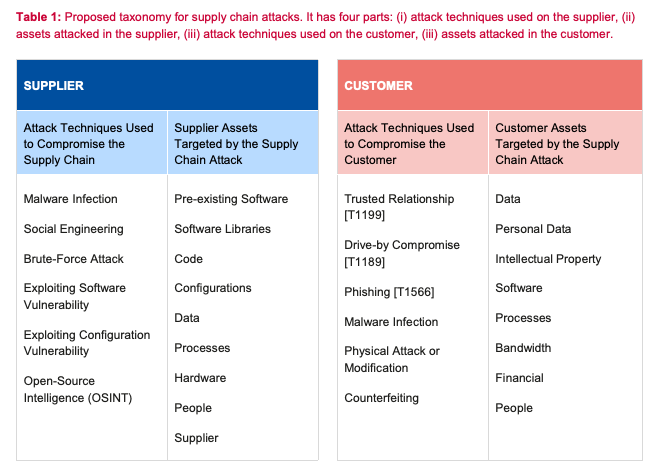
This report aims at mapping and studying the supply chain attacks that were discovered from January 2020 to early July 2021. Based on the trends and patterns observed, supply chain attacks increased in number and sophistication in the year 2020 and this trend is continuing in 2021, posing an increasing risk for organizations. It is estimated that there will be four times more supply chain attacks in 2021 than in 2020. With half of the attacks being attributed to Advanced Persistence Threat (APT) actors, their complexity and resources greatly exceed the more common non-targeted attacks, and, therefore, there is an increasing need for new protective methods that incorporate suppliers in order to guarantee that organizations remain secure.
Growth and Commoditization of Remote Access Trojans
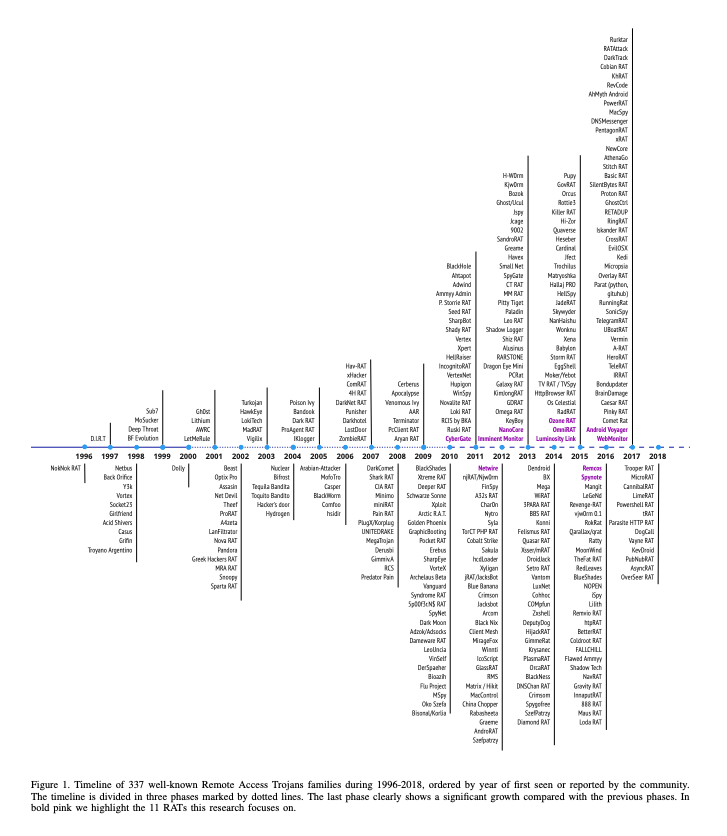
In the last three decades there have been significant changes in the cybercrime world in terms of organization, type of attacks, and tools. Remote Access Trojans (RAT) are an intrinsic part of traditional cybercriminal activities but they have become a standard tool in advanced espionage and scams attacks. The overly specialized research in our community on Remote Access Trojans has resulted in a seemingly lack of general perspective and understanding on how RATs have evolved as a phenomenon. This work presents a new generalist perspective on Remote Access Trojans, an analysis of their growth in the last 30 years, and a discussion on how they have become a commodity in the last decade. We found that the amount of RATs increased drastically in the last ten years and that nowadays they have become standardized commodity products that are no very different from each other.
A Study of Machete Cyber Espionage Operations in Latin America
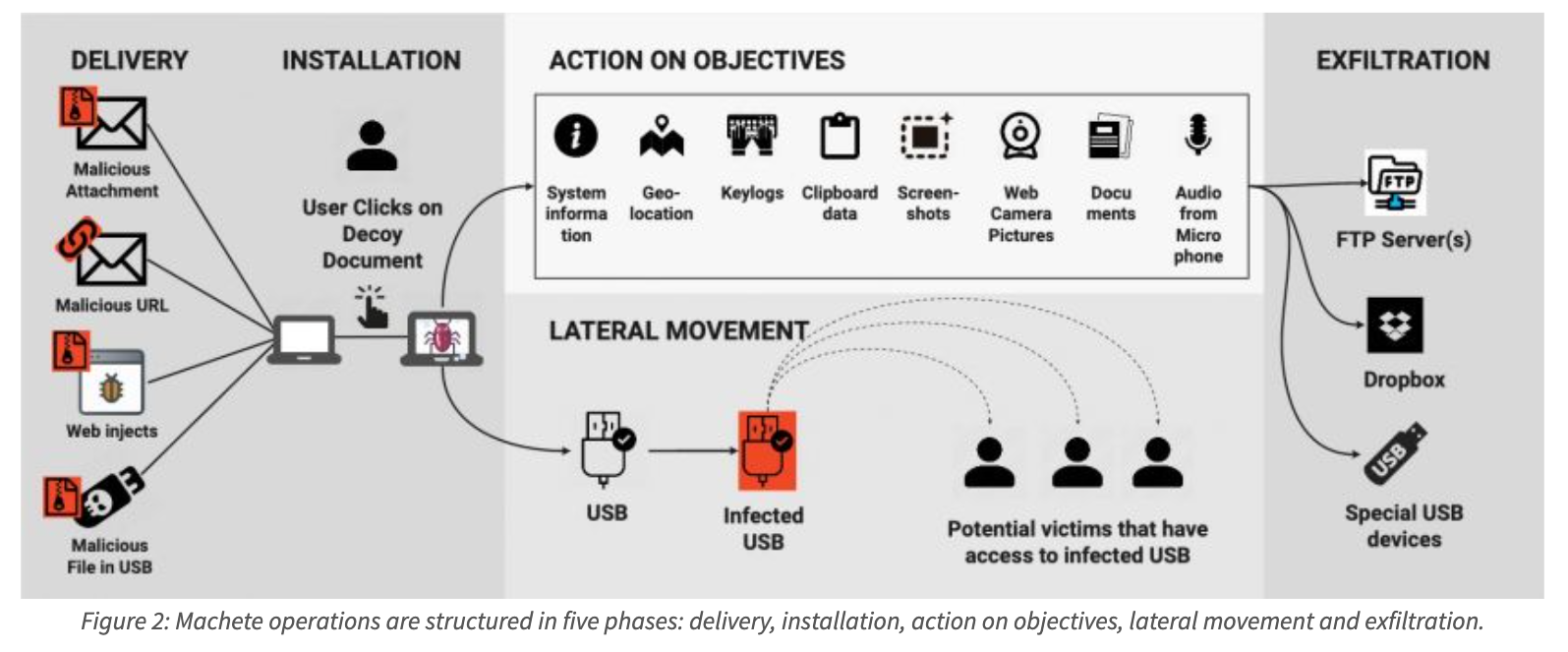
Our research shows that Machete is operated by a highly coordinated and organized group that focuses on Latin American targets. We describe the five phases of the APT operations from delivery to exfiltration of information and we show why Machete is considered a cyber espionage tool. Furthermore, our analysis indicates that the targeted victims belong to military, political or diplomatic sectors. The review of the almost eight years of Machete operations shows that it is probably operated by a single group whose activities may be state-sponsored. Machete is still active and operational to this day.
Machete: Dissecting the Operations of a Cyber Espionage Group in Latin America
Reports on cyber espionage operations have been on the rise in the last decade. However, operations in Latin America are heavily under researched and potentially underestimated. In this paper we analyze and dissect a cyber espionage tool known as Machete. Our research shows that Machete is operated by a highly coordinated and organized group who focuses on Latin American targets. We describe the five phases of the APT operations from delivery to exfiltration of information and we show why Machete is considered a cyber espionage tool. Furthermore, our analysis indicates that the targeted victims belong to military, political, or diplomatic sectors. The review of almost six years of Machete operations show that it is likely operated by a single group, and their activities are possibly state-sponsored. Machete is still active and operational to this day.