


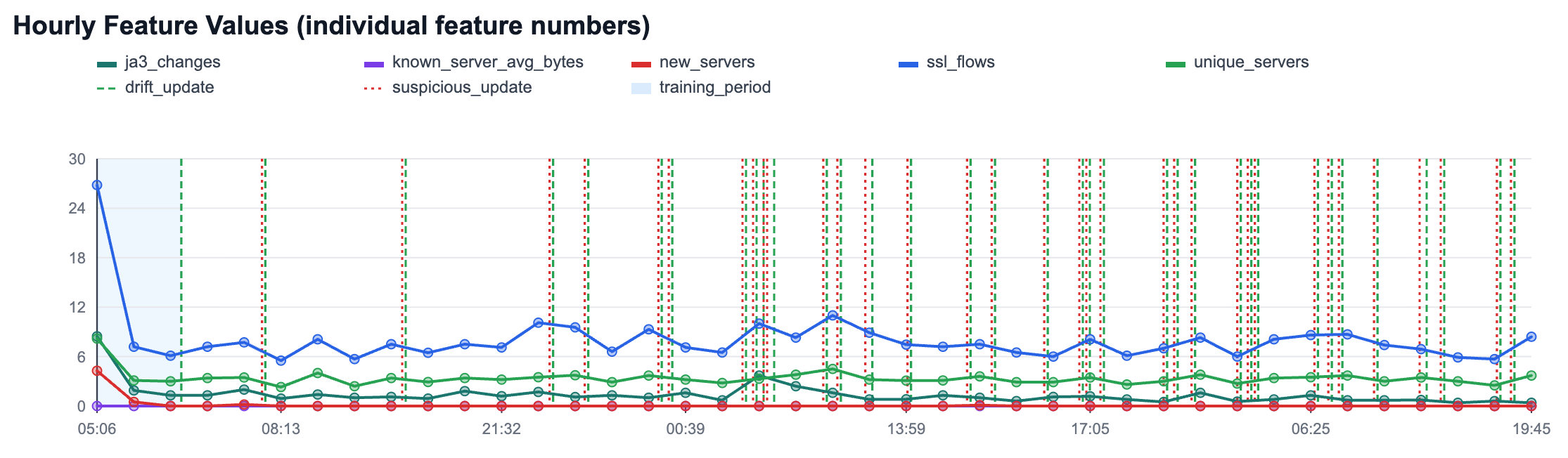
The new HTTPS anomaly detection module in Slips builds per-host adaptive baselines in traffic time, then detects deviations at two levels: per-flow (for bytes to known servers) and per-hour (for host behavior like new servers, unique servers, JA3 changes, and flow volume). It uses online statistics and z-scores for transparent scoring, plus controlled adaptation states (training_fit, drift_update, suspicious_update) to keep learning while reducing poisoning risk.
The result is explainable, operational evidence in clear human text: what changed, confidence, and why it is anomalous.

Rethinking Cybersecurity Defense: Principles from Biological Immunity
Our research identifies sixteen fundamental principles of biological immunity and translates them into cybersecurity defense architectures that emphasize multi-dimensional coordination over single- point tactics.
New Slips version v1.0.12 is here!
Our team is excited to share the latest news and features of Slips, our behavioral-based machine learning intrusion detection system.
New Slips version v1.0.11 is here!
Our team is excited to share the latest news and features of Slips, our behavioral-based machine-learning intrusion detection system.