


immunity

Adaptive Response in Slips IDS as Immune T Cells

Adaptive Response in Slips IDS as Immune T Cells

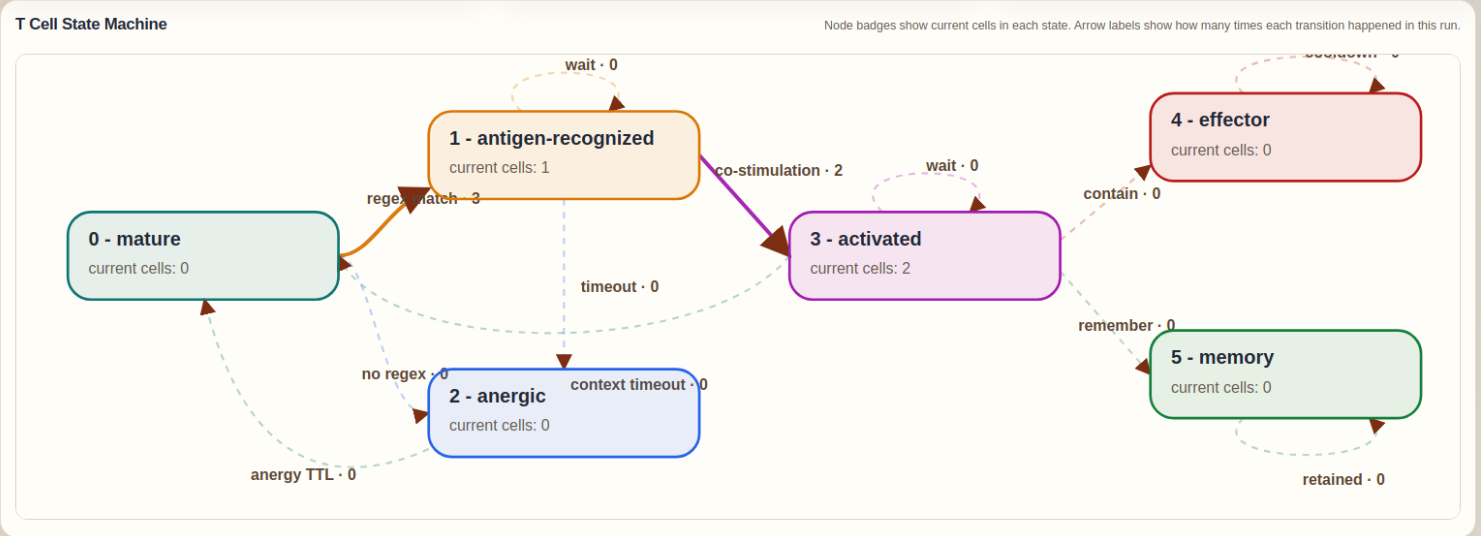
The T Cell module was created to give Slips a stateful adaptive response layer on top of its existing evidence pipeline. While the original detectors already provide the innate immune component through PAMP and DAMP evidence, the T Cell module adds antigen recognition, co-stimulation, context evaluation, tolerance, activation, effector action, and memory. It does this by extracting structured antigens from live evidence, matching them against the accepted regex repertoire generated by RegexGenerator, and then combining that recognition with the cumulative danger signaled by recent PAMP and DAMP observations. This allows Slips to move from isolated detections to a more explicit immune decision process that can decide when to ignore, when to contain, and when to remember.

Adapting Detections in Slips with Immune Pseudo-Generated Regexes

Adapting Detections in Slips with Immune Pseudo-Generated Regexes

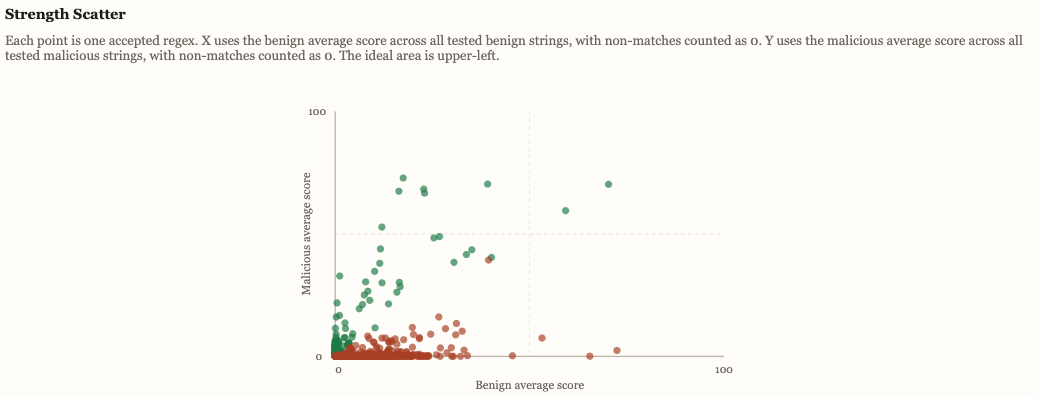
The RegexGenerator module was created to give Slips an adaptive way to discover new string-based detectors for changing indicators such as domains, URIs, filenames, TLS SNI values, and certificate common names. It continuously uses the shared LLM service to propose one regex at a time, then applies local validation and negative selection against benign corpora to reject unsafe or overly broad patterns. The accepted regexes become a reusable adaptive recognition repertoire for other modules, especially the T Cell responder.

Rethinking Cybersecurity Defense: Principles from Biological Immunity

Rethinking Cybersecurity Defense: Principles from Biological Immunity

Our research identifies sixteen fundamental principles of biological immunity and translates them into cybersecurity defense architectures that emphasize multi-dimensional coordination over single- point tactics.